Cursor launches Origin, its own code hosting, during a day-long GitHub incident
Origin began rolling out on Monday in early beta on Cursor's paid plans, hours into a GitHub incident running around 20 percent error rates on web and API traffic. Nothing published by either company connects the two.
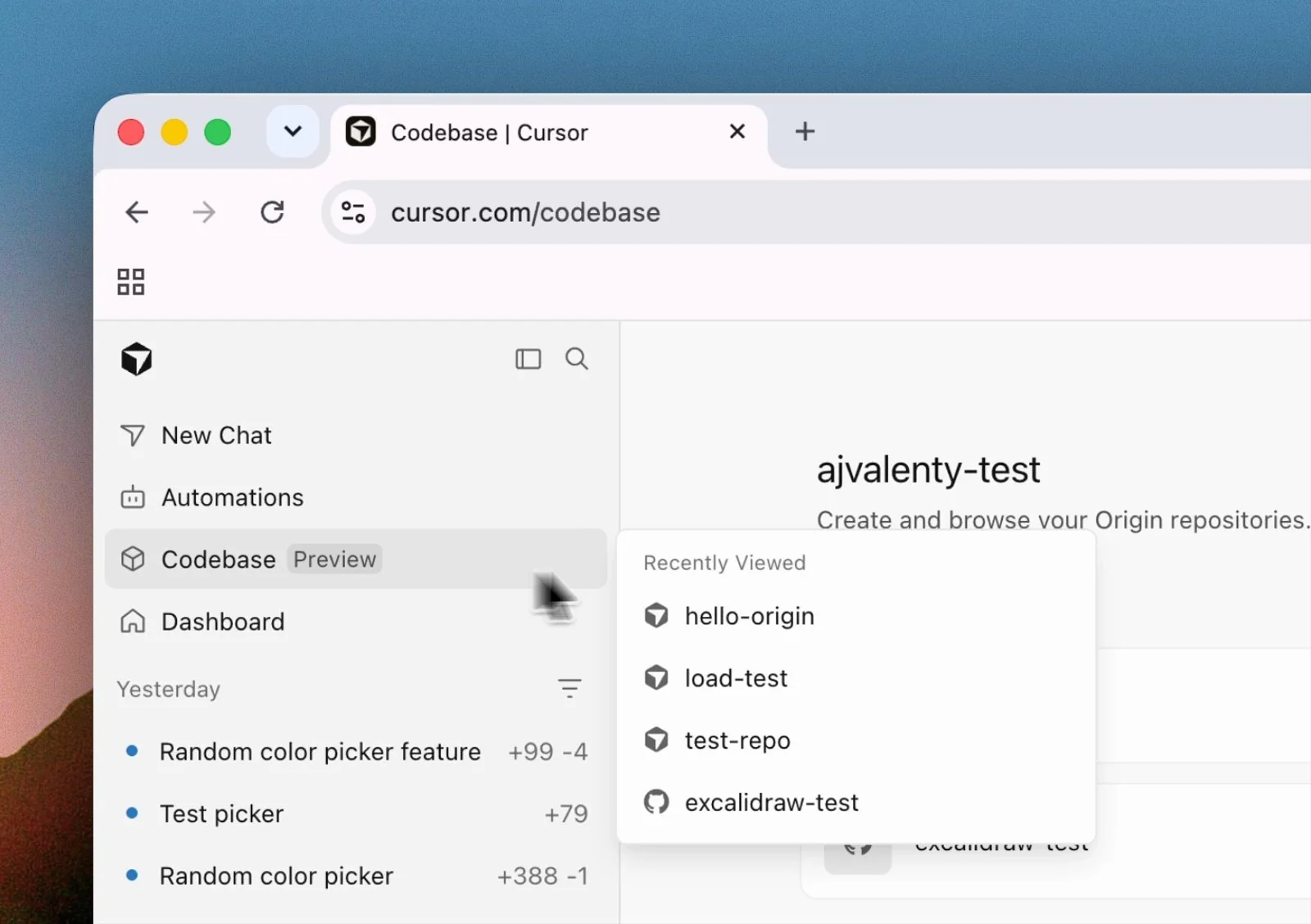
Cursor began rolling out Origin, its own code hosting platform, on Monday — the same day GitHub spent four hours degraded. GitHub's status page opened the incident at 13:40 UTC and reported error rates of around 20 percent across web experiences and API traffic, with archive downloads and raw repository content at roughly 50 percent.
Origin is in early beta on all paid Cursor plans, except enterprise organisations whose administrators opt out. It starts with what Cursor calls the essentials: repositories, pull requests, code browsing and GitHub sync, with agent-native features to follow. Repositories live under a codebase name that becomes part of every repository URL, and agents can answer questions about the code, change it, update a pull request or push a branch from the same place.
It is not an ultimatum to leave GitHub. Existing repositories can be synced in and sit alongside the ones Cursor hosts: the synced copy updates in real time, pushes keep going to GitHub, which stays the source of truth for anything started there, and pull-request activity moves both ways — a comment written in Cursor posts to GitHub, a reply on GitHub appears in Cursor within seconds.
| Time, UTC | GitHub's incident page, 17 August 2026 |
|---|---|
| 13:40 | Investigating impacted performance |
| 13:45 | ~20% error rate across Pull Requests, Issues |
| 14:24 | ~20% web and API; ~50% archive and raw downloads |
| 16:59 | Degradation mitigated, monitoring |
| 17:34 | Residual impact; incident still open |
Cursor's changelog entry, published the same day, listed what Origin ships with:
- Repositories, pull requests and code browsing
- GitHub sync, with GitHub remaining the source of truth
- Agents working on the repository and its pull requests
- Apps: Vercel previews, Depot and Buildkite CI
- Agent-native features, which "ship soon"
Three integrations shipped with it. Vercel gives every pull request a preview deployment; Depot and Buildkite run continuous integration, both of them executing existing GitHub Actions workflows, with Buildkite also running its own pipelines. Cursor says more are coming.
GitHub's day was degradation rather than an outage: services stayed up and failed a share of requests. Over four hours the status page listed API Requests, Actions, Issues, Pull Requests, Pages, Webhooks, Copilot and Git Operations as degraded, along with SAML and OIDC authentication, SCIM and Team Sync. The company said it had identified the problematic component at 16:36 UTC and that the degradation was mitigated at 16:59. That did not end it: at 17:34 GitHub reported "residual impact across numerous services" and was still applying mitigations, with Git Operations and Issues degraded again. The incident was open when this was published.
The launch matters beyond the timing. Cursor started as an editor, bought Graphite in December, and now covers the repository, the pull request, review, continuous integration and — through Vercel — deployment. Each step it adds is one a developer no longer leaves the editor to reach.
The two events are almost certainly a coincidence, and should be read as one. Cursor's changelog does not mention GitHub's incident, no launch date was published in advance that the incident could have been matched to, and neither company has said the two were related.
Sources
This article was written from these pages. Read them.
- primaryCursor changelog — Origin Code Hosting, 17 August 2026cursor.com
- primaryGitHub Status — Incident with GitHub.com, 17 August 2026githubstatus.com
- secondaryWhat we know about the GitHub outageforbes.com
Written from verified primary sources by Epoch's editorial pipeline and checked by a human before publication.